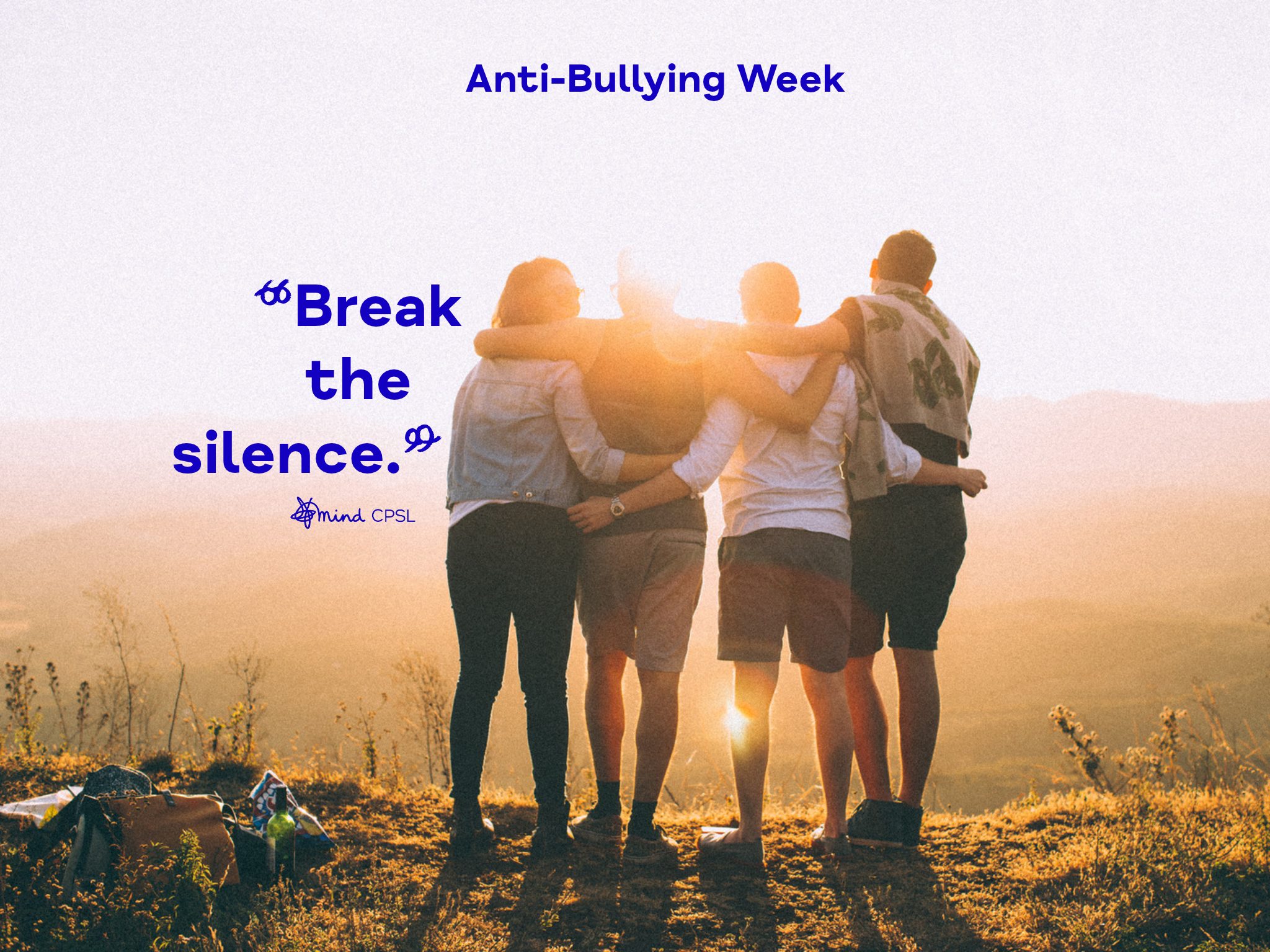
Anti-Bullying Week 2026 takes place from Monday 16th to Friday 20th November, and this year’s theme is “Break the Silence.”
The campaign, led by the Anti-Bullying Alliance, encourages everyone to speak up about bullying, listen to others and help create a culture where no one feels they have to suffer in silence. It highlights the importance of open conversations, standing up against bullying and making sure people experiencing bullying know they are not alone.
At CPSL Mind, we want to raise awareness of the impact bullying can have on mental health and wellbeing, encourage people to recognise the signs that someone may be experiencing bullying, and empower everyone to speak out and offer support.
Bullying, whether in person or online, can have a significant impact on someone’s mental health. It can lead to feelings of isolation, low self-esteem, anxiety and, in some cases, severe emotional distress. Sometimes, people may find it difficult to talk about what they are experiencing or know where to turn for help. By creating safe spaces for honest conversations, listening without judgement and showing kindness and understanding, we can all play a part in breaking the silence.
How to help someone who might be struggling
If you’re worried that a friend, colleague or family member is experiencing bullying, or struggling with its emotional impact, small gestures can make a big difference:
- Keep in touch – Send a quick message or check in with a phone call to remind them that you’re there and they don’t have to face things alone.
- Actively listen – Give them time and space to talk. Let them share their experiences at their own pace, without judgement or pressure. Sometimes, simply being heard can mean a lot.
- Encourage them to speak up – Reassure them that it’s OK to ask for help and support them if they decide to talk to someone they trust, such as a teacher, colleague or HR lead.
- Offer reassurance – Let them know that bullying is never their fault and that they deserve to feel safe, respected and supported.
- Encourage positive activities – Suggest doing something they enjoy together, such as going for a walk, getting creative or trying a new hobby. Spending time doing something positive can help boost confidence and wellbeing.
Staying safe online
With so much of our communication happening digitally, it’s important to help young people and adults alike feel safe and supported online. Cyberbullying can happen through social media, messaging apps, online games and other digital platforms. Here are some ways to help protect yourself and others:
- Avoid sharing personal information or your location publicly.
- Don’t feel pressured to respond to negative or hurtful comments. Save evidence where appropriate, and report or block accounts where necessary.
- Talk to someone you trust if you experience or witness online bullying.
- Take regular breaks from social media and make time to reconnect offline.
- Follow positive, uplifting accounts that inspire and encourage wellbeing.
Helpful links and support
If you or someone you know is affected by bullying or its impact on mental health, there is help available:
- Anti-Bullying Alliance – Campaign information, advice and educational resources.
- YoungMinds – Support and advice for young people and parents.
- National Bullying Helpline – Advice and support for adults and young people.
- Mind – Information about where young people aged 11–18 can find help and support.
- NSPCC – Guidance for children, young people and parents on bullying and cyberbullying.
How CPSL Mind can help
At CPSL Mind, we’re committed to creating kinder, more connected and supportive communities where everyone feels able to access help when they need it.
We offer a range of local services, including one-to-one and group support, across Cambridgeshire, Peterborough and South Lincolnshire. We support more than 8,000 local people with their mental health and wellbeing.
Some of the people we support are adults who have experienced bullying during childhood. Our teams use active listening skills to give people the time and space to talk about their worries and concerns, offering guidance and support along the way.
Bullying can leave people feeling isolated, disconnected and unsure of who to turn to. It can lead to social withdrawal and make it difficult to maintain relationships with friends and family. That’s why it’s so important to remember that you don’t have to deal with things alone. Talking to someone you trust and reaching out for support can be an important first step.
Our Good Mood Cafes offer welcoming, friendly spaces in the community where people can connect with others, share interests and hobbies, and enjoy time together without judgement. They’re a great opportunity to build connections, reduce loneliness and offer support to one another.
Sessions are run on a drop-in basis, so there’s no need to book. Find a Good Mood Cafe near you.
Breaking the silence starts with all of us. Whether it’s checking in with someone, listening without judgement or encouraging someone to reach out for help, every conversation can make a difference. Together, we can challenge bullying, support those affected and help create communities where everyone feels heard, valued and supported.