Sign up to receive bi-monthly news and updates from CPSL Mind. You can unsubscribe at any time.
April 1, 2026
Things you can do if you’re feeling stressed
Are you feeling stressed? We have pulled together a guide to help you understand what stress is, how to identify if it is a problem, and the 17 things you can do if you’re feeling stressed.

Stress is a common mental health challenge. Many different situations or life events can cause stress. It is often triggered when we experience something new or unexpected that threatens our sense of self or when we feel we have little control over a situation. We all deal with stress differently.
Stress Awareness Month is an annual event observed every April since 1992, dedicated to increasing public awareness about the causes, effects, and management of stress. The Stress Management Society, a non-profit organisation established in 2003, has been championing this initiative for over two decades.
The theme for 2026 is #BeTheChange and The Stress Management Society says it’s about recognising that your mind is powerful, your actions matter, and your connections are essential. It’s about self-belief meeting purposeful action. Whether it’s a small shift in your daily routine, reaching out to someone who needs support, or challenging a stressful situation head-on, every action counts.
We have pulled together a guide to help you understand what stress is, how to identify if it is a problem and the 17 things you can do if you’re feeling stressed.
But first let’s understand what stress is and when does it become a problem.
What is stress?
According to NHS inform “Stress is the feeling of being under too much mental or emotional pressure. Pressure turns into stress when you feel unable to cope.”
How to identify if stress is a problem?
Being under mental pressure for a short period of time can be helpful. But frequent and prolonged periods of stress can lead to anxiety, depression and also affect our health and wellbeing.
Here are some signs to look out for to identify if you are feeling stressed.
Mind says working out what triggers stress for you can help you anticipate problems. And you can think of ways to solve them. Even if you can’t avoid these situations, being prepared can help.
Signs of stress
- Problems with sleep
- Feeling irritable and anxious
- Difficulty in focusing and making decisions
- Eating a lot or too less
- Sweating and fast breathing
- Getting easily angry and impatient
- Constantly worried
- Isolating from others
Every person may react differently depending on the situation and the level of stress. In some cases, severe stress can also lead to feeling suicidal, depressed, and lonely.
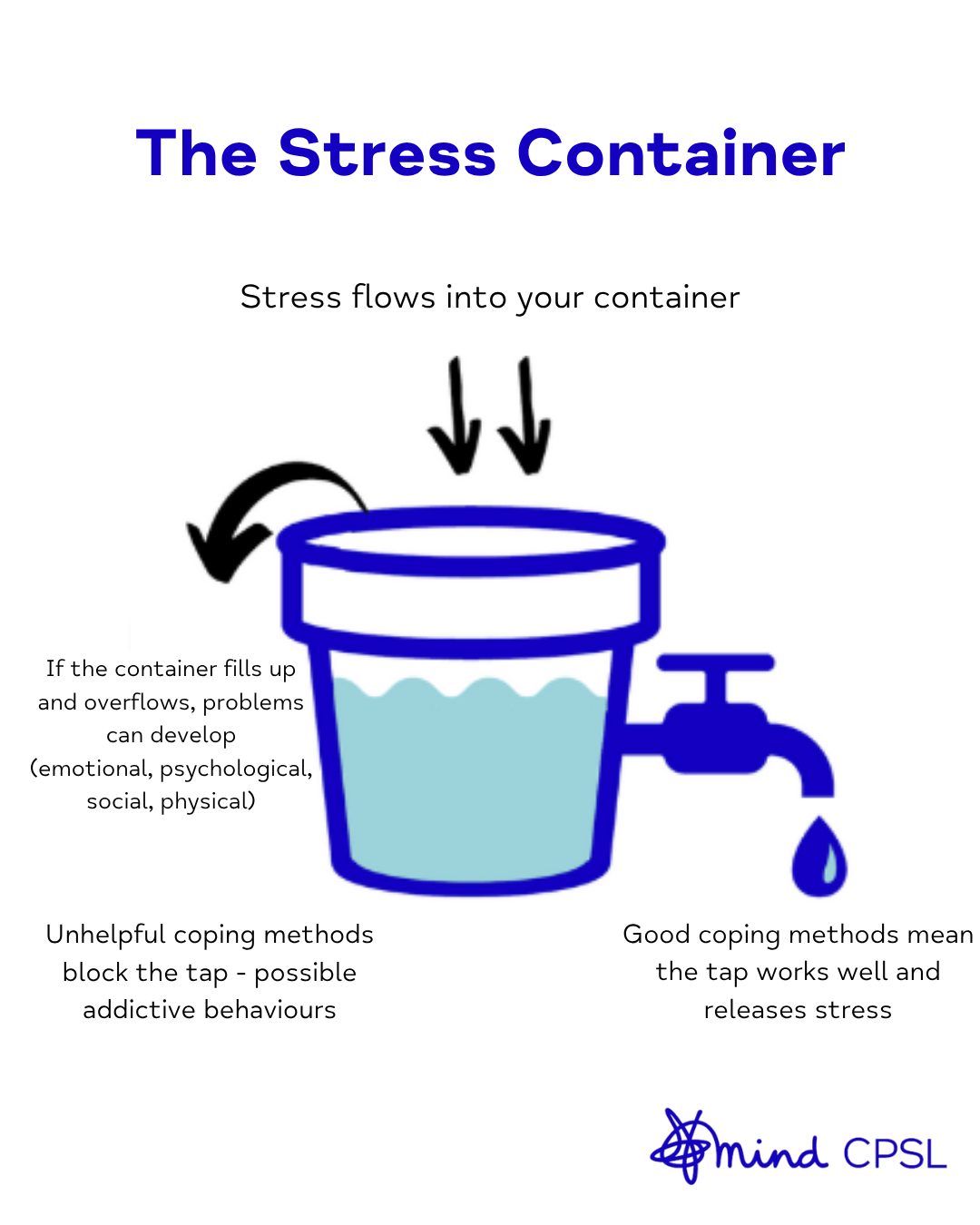
At CPSL Mind, our training team talk about ‘The Stress Container’. We have shared the below graphic to explain:
It’s really important to make sure your container doesn’t overflow and we hope our tips help you.
17 things you can do if you’re feeling stressed
Helen Young, our Victim and Witness Support Service Manager has provided some tips that you can find helpful when feeling stressed.
1. Just breathe
Take a few deep breaths to release the tension. You can also try some calming breathing exercises.
2. Step away from the current situation.
Even if it’s only for a few minutes. For instance, if you are at work, step away from your desk to have a glass of water or go to the kitchen to get a cup of tea/coffee.
3. Talk to someone or watch something that makes you laugh.

Even remembering joyful moments can be helpful to divert you from the stressful situation.
4. Step out

Step out in the fresh air or just open a window nearby.
Olivia Hubbard, Communications and Engagement Manager at CPSL Mind, really enjoys her nature walks. Olivia says, “I enjoy walking in nature most days and I really notice when I haven’t made it out! I enjoy listening to the wildlife, noticing the changes in the seasons, and movement really helps ease any feeling of anxiety. Now we are in April, I’m really excited about the spring walks and lighter evenings. On my local walk, before the disappears for the day, the rabbits hop back into their burrows and the deer dart off in the distance. Walking in nature encourages us all to slow down and take notice of our surroundings. You can’t beat it.”
5. Connect

Connect with people with whom you feel comfortable. Avoid putting yourself under stressful situations to meet new people.
6. Get creative
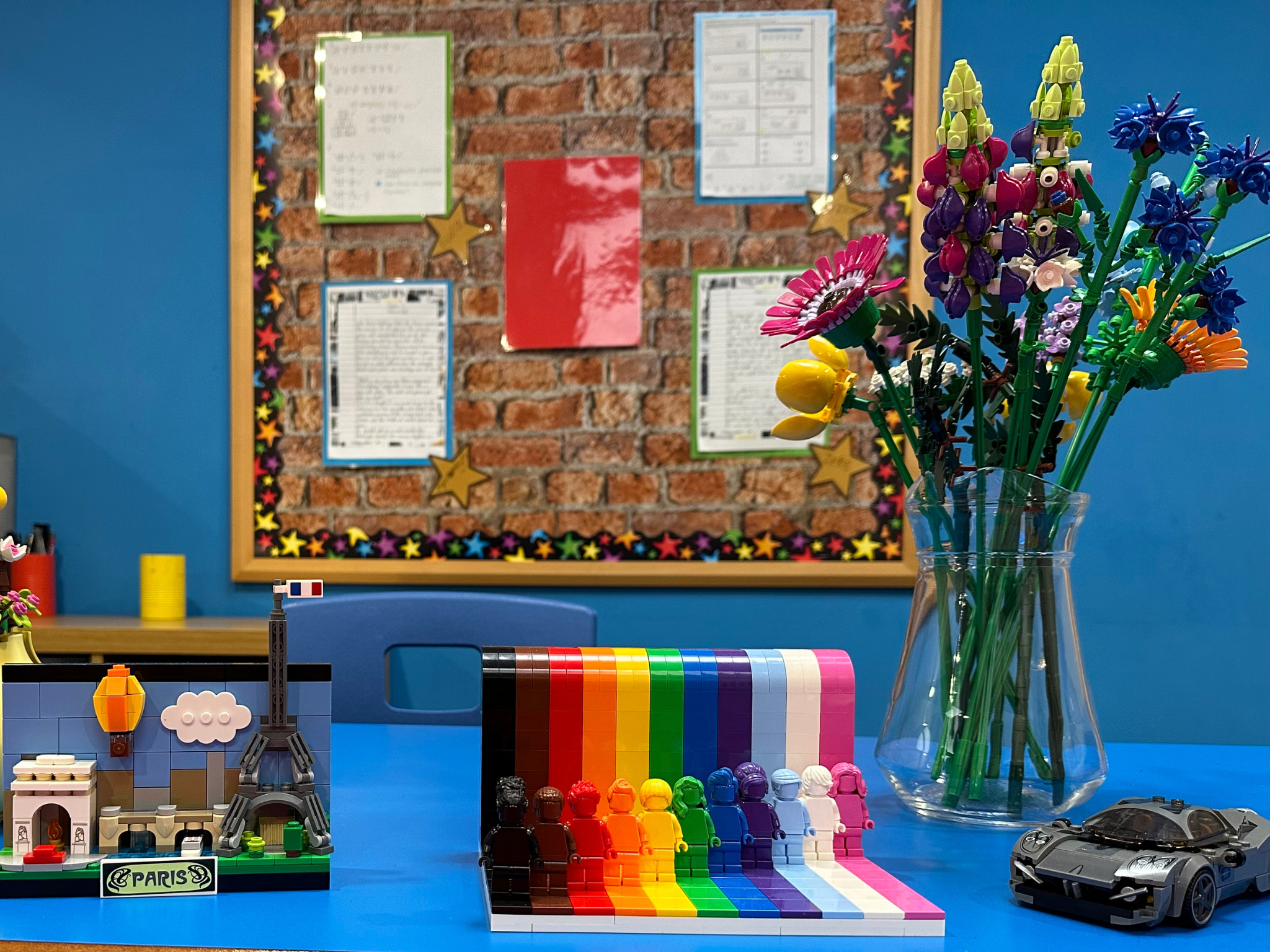
Make time for something creative like journaling, writing, doodling or art and crafts. These activities are a great way to unwind at the end of the day.
Lisa Thomas, Mental Health Community Connector Service Co-ordinator at CPSL Mind, enjoys crafting in her spare time. Lisa says, “I have recently enjoyed taking part in crafting sessions at home. I really like that there’s no distractions from the TV or anything and it’s bliss. Crafting really helps me to immerse myself in some quiet time. My latest crafting masterpiece was a clothing badge!”
7. Slow down
Slow yourself down to avoid working hastily when stressed. We tend to work in a rushed manner when we are extremely stressed – instead try slowing down and focusing on one task at a time.
8. Make a little box full of nice things
Like your favourite chocolate, perfume, photographs, snacks, books and more. You can open this box whenever you feel stressed and take out one thing to feel de-stressed and feel relieved. You can also decorate this box which is also something you can do to de-stress.
9. Make an activity jar

Make a jar that contains chits which have a fun activity written on it which can help you cope with stress. The activity can be going for a short walk, eating your favourite thing, listening to your favourite song or even talking to your family or friends.
10. Celebrate your small achievements
Like cleaning your closet or talking a 10- minute walk. This helps feel happy and it also gives a sense of relief.
11. Get Active

Focus on physical activity even if it is a 5-minute walk. Adding some physical activity in your routine helps you divert your focus and also equips your body to deal with stressful situations.
12. Take time to recognise situations that could make you stressed.
This helps you be prepared for what steps you can take to cope better with stress.
13. Make a to-do list

Try to be organised by making a to-do list which helps you manage your time to avoid stress and panic. Don’t forget to add break time in as well when you make your plan for the day.
14. Rest well
Try to rest well by getting a good night’s sleep so that your body and mind have fully recovered to take on the new day.
15. Take part in community activities

Volunteering for your local charity or helping organise a fun community event. This helps you stay grounded and focus on the things that really matter. Check out volunteering opportunities near you.
16. Do not hesitate to ask for help if needed.
If you feel like you cannot contact someone you trust have a look at our Get Help Now page to look for some mental health support.
17. Try Community support
You can also visit one of our Calm Spaces and Good Mood Cafes to relieve stress and connect with people in your local community. To manage work related stress, you can have a look at our Managing Mental Health in the Workplace and Mental Health Awareness training courses.
Other Posts

 May 26, 2026
Looking after your mental health doesn’t have to feel overwhelming. These 10 simple tips are designed to give you easy, practical ideas you can try in everyday life to help support your wellbeing and build positive habits over time.

July 22, 2024
Understand why staying well is important for mental health and how our wellbeing impacts our emotional and mental health.

September 18, 2024
We recently visited The Farmers Good Mood Cafe in Yaxley, Peterborough. In this blog, we hear from John and Alvin who have experienced mental health challenges and they share how the Good Mood Cafes can help you when you feel like you’re not coping. We also caught up with CPSL Mind volunteers Teresa and David Baker, to hear how volunteering at the Good Mood Cafes is so rewarding.
Sign up to
our newsletter
Newsletter