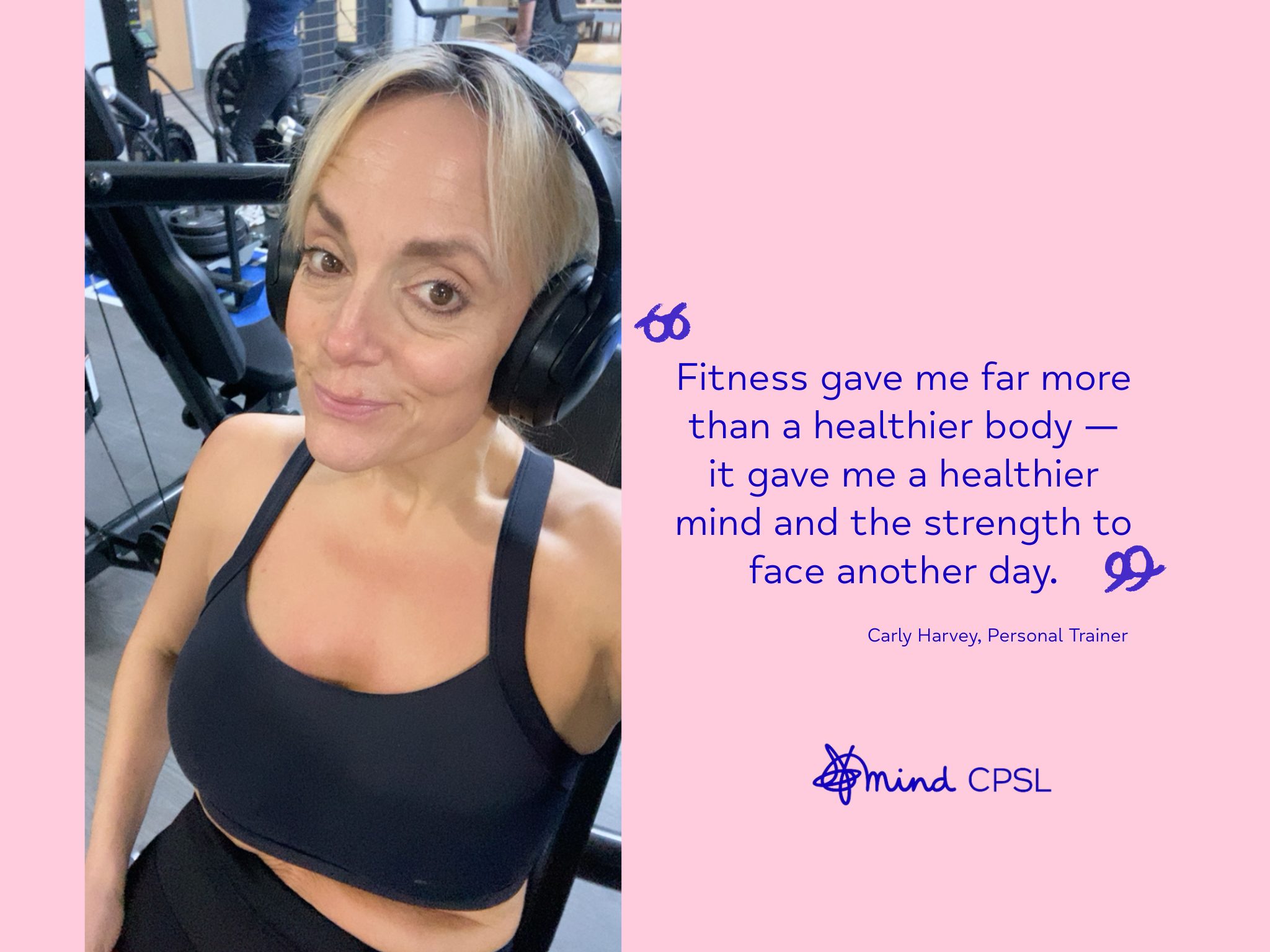
By Carly Harvey, Personal Trainer
Running was never an exercise I particularly enjoyed — if I’m honest, I get bored very easily. But during some of the darkest periods of my life, running became something I relied on, not for enjoyment, but for the benefits it gave me.
It became my space to switch off and let my emotions flow. I’ve always run solo, alone with my thoughts, often with sad music playing, allowing myself to cry — what I call my “crying runs”. It might sound strange, but it truly helped keep me together. As someone who struggles to cry about personal things, running became my release; a way to let everything out.
I think, during those difficult times, I really began to understand the link between physical activity and mental wellbeing. Running gave me a sense of feeling lighter, stronger and more able to face another day. Fitness gave me far more than a healthier body — it gave me a healthier mind and the strength to keep going.
From personal experience to professional purpose
Those experiences led me to retrain and change career paths, becoming a Personal Trainer with a focus on supporting people who feel exercise is out of reach. My aim has always been to help others take those first steps, using movement as a way to reset, build self-esteem and support mental health.
Even on my own darker days, my work continues to lift me because its purpose is so powerful. I coach people while remembering exactly how it felt to be nervous about entering a gym, unsure of my ability, and unaware of how deeply fitness could support my mental wellbeing.
Mindset plays a huge role in my coaching. I encourage people to see exercise as nourishment, not punishment, and to acknowledge their feelings rather than ignore them. Creating a safe, non-judgemental space for clients is incredibly important to me — because you never truly know what someone is going through.
Why CPSL Mind matters to me
CPSL Mind is a charity very close to my heart. I have personally accessed their services which I’m incredibly grateful for.
As a teenager, following the death of my father, my mum struggled with her mental health. It was devastating to witness. As an adult, I understand how easily people can reach a breaking point, which is why it means so much to see mental health talked about more openly today, with support far more accessible than it once was.
Why fundraising and running for CPSL Mind matters
Events like the Cambridge Half Marathon play a vital role in supporting charities such as CPSL Mind. Every person who laces up their trainers to fundraise helps ensure that mental health support remains available for people when they need it most.
For many runners, training is not just about race day. It’s about finding purpose, routine and a way to care for their own mental health, while knowing their efforts are helping others feel less alone. That connection between movement, mindset and community support is incredibly powerful — and it’s why events like this matter so much.
By raising funds for CPSL Mind, runners are helping to make sure people can access support earlier, feel understood, and have somewhere safe to turn during difficult times.
Training tips for the Cambridge Half Marathon
If you’re preparing for the Cambridge Half Marathon, here are my key tips to support both your physical and mental wellbeing:
Build up gradually
Consistency is key. Increase your mileage slowly — no more than 10% per week — to reduce the risk of injury and overwhelm.
Plan realistically
Map your training around your life. Identify non-negotiable commitments first, then schedule runs where they genuinely fit. This helps avoid stress and burnout.
Prioritise rest and recovery
Rest days are essential. They help prevent injuries like shin splints or knee pain and support your mental wellbeing too. Training shouldn’t become an added source of anxiety.
Add strength training
Short, regular sessions focusing on glutes, hamstrings, calves and core can make a huge difference. Again, keep it realistic and manageable.
Fuel your body properly
Think of your body as an engine. Longer runs require more fuel, particularly carbohydrates, alongside prioritising protein for recovery. Practise race-day nutrition during training.
Listen to your body
Muscle soreness is normal — pain is not. Missing one run is far better than being sidelined for weeks with an injury.
The mental benefits of training for a cause
Having a structured goal, like a half marathon, gives purpose to training. It creates confidence through small weekly wins and provides consistency when motivation dips.
Fundraising for a charity like CPSL Mind adds even more meaning. On the tough days, remembering why you’re running can be a powerful motivator and something to feel incredibly proud of.
If you’re feeling anxious or full of self-doubt, please know that it’s completely normal — even experienced runners feel this way. Completing a half marathon is a huge achievement, however you choose to do it. Run, jog or walk — it all counts.
On low-motivation days, try to remember how you felt after previous runs: the sense of pride, the freedom, the lift in mood. Movement helps regulate stress and anxiety, and even when it’s hard to start, there’s always a sense of achievement at the end — I did it.
From my experience, movement and running can be incredibly powerful tools for mental health. Being present with your feelings, reducing stress, and reconnecting with yourself — these moments matter.
A message to everyone taking part
To everyone training for the Cambridge Half Marathon — good luck. Be kind to yourself during training, trust the work you’ve put in, and remember why you started. Whether you run, jog or walk across that finish line, what you’re doing is incredible.
Get involved
If Carly’s story has inspired you, you can follow more of her work, training tips and honest conversations around fitness and mental wellbeing on Instagram and Facebook.
If you’d like to support CPSL Mind and those running the Cambridge Half Marathon for mental health, you can donate here: Support CPSL Mind via the Cambridge Half Marathon
Every donation helps ensure people feel seen, supported and not alone.